Showing posts with label Mangochi. Show all posts

Tuesday, 1 December 2009

Thank you for your nomination about the blog


A recent opinion poll has ranked my blog as one of the top 100 interesting blogs from Malawi.
The internet research was conducted by an old classmate and friend of mine who is based in Virginia, USA and whom I haven’t seen for 21 years.
He has acknowledged that in 1982 when we used to swim together in the mad running water of Jubile river in Ezondweni , Mtwalo ,Mzimba while our cows went around eating others peoples maize stalks ; he did not know that those experiences would be shared through internet many many years later . He also acknowledges the fact that for boys who used to sit on the mad floor and lose writing pencils everyday at Ezondweni Model school,and constntly wishing if we were born in another country and blaming God for our problems ; it a blessing that I can have a blog with less blasphemy.
He goes on to say that at that time we had no reasons to thank God for, but now we have many.
His views are shared by many other respected Malawian bloggers; who suggest that if I only seriously took some blogging lessons ( for a few dollars) I could probably produce some blogs that are more palatable and more beneficial to the nation of Malawi .One blog in particular , quoted that “for a man who can manage to see the following places in Malawi within a week: Chididi in Nsanje , East bank in Chikwawa , Kunenekude in Mwanza , Namitambo in Chirazulu and Mulibwanji in Mangochi , all of them extremely boring – and still blog about them !!! deserves some special award “. I am glad that people have realized that the work I do and the places I visit are not all fun, but somebody has to do the job, unfortunately for this time its me. No matter how boring the areas I visit are –some Malawians come from there and they need a visit.
Some bloggers have rated the blog as one o the worst 100 and least likely to be educative .That is what opinion polls are about.
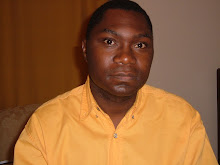
I dedicate this blog to the volunteers of Nancholi Health centre in Mangochi Distrct that appear in the picture "with me included" .They recently did a good job in identfifying a lot of blind children .
What’s the prize and suggestions for the future?
Most readers suggest that if I stop blogging about the past and boring communities that I visit and concentrate on the good life that there is in Malawi (Lilongwe, Blantyre) and how I am part of that, one day I may be nominated by the majority of bloggers in Malawi and appear at the annual Entertainers awards that takes place yearly at end of December, Mount Soche Blantyre. Moreover they advise that unless I change my writing styles I may never move from rural “Kwabaluti” in Blantyre where I currently stay ( I am sure you haven’t heard of where it is) to more important places like Namiwawa, Sunnyside and Nyambadwe where the rich and famous live .
I am still young in the blogging sector; and I like writing about blind people and the poor communities they live in; hence I prefer to live in similar communities.
Hence I refuse their award that is based on bribery about my writing skills.
However my colleague from Virginia thinks that if he ever gets back to Malawi, we should go back to Ezondweni Village Mtwalo together and have a good laugh of what lives we used to have .I personally do not think he will ever get back to Malawi.
You can also rank my blog. Do you think its one of the worst 100 from Malawi?
What do you say?
Email me!

Monday, 23 November 2009

Primary Health Care (PHC): Fantasy or reality for Malawi


From the recent political blog, I am back to my senses after sobering up and ready to report on more community work. Today I am writing about Primary health Care, PHC in short.

There is a long definition of what PHC is supposed to be as given by World health Organisation: (WHO, Alma Ata Declaration. WHO1978 p.3-4) that includes 5 sets of principles, viz: affordable and sustainable health systems development, appropriate(user friendly) technology, intersectoral collaboration, community participation ,and equity to access of services –whatever these mean!!! “Remember the Health for all by the year 2000” this was one of the WHO initiatives that was going to use PHC.
Heard about Millennium development goals (MDG’s) - most of these need PHC to be achieved.
So why is an eye doctor in the forefront talking about PHC? Well, for your information we are supposed to be integrating primary eye care (PEC) into Primary Health Care (PHC).There is now renewed call by “WHO” for implementing PHC in developing countries.

But how are countries like Malawi doing on PHC at grassroots level? This is a political question so need to be answered by politicians; but I will only be giving my views based on my experiences with the communities mainly in Southern region of Malawi. For this blog I will concentrate on my experiences during my recent visit to Mangochi district.
Fact 1 : Health Surveillance Assistants (HSA’s) are the main provider of primary health care in all communities in Malawi .I was introduced to this group of workers in 2007 when I started my research in eye care and since then I have interview over 200 HAS’s and trained about the same number on primary eye care. They fall under two levels of employment by the Government; those employed before 2007 –referred as normal HSA’s and those after July 2007,referred as the Global HSAs’s (because they were deployed under the global fight against HIV/AIDS initiative).They all are supposed to undergo a 10 week orientation training in everything (preventive ,curative and rehabilitative services) and then attend other on-job trainings .
Fact 2: At most 50% of all HSA’s recruited in 2007 have not after 2 years formally attended their 10 week training in Mangochi, Zomba and Mulanje and are actively doing their day to jobs without training .
Are we sure these personnel are doing what we intended them to be doing? Are they doing standardised procedures?
Fact 3: Some of the health centres with a catchment area of higher than 10,000 persons have no medical assistants, or nurses and are left to be taken care by HSA’s who attend to and treat all sorts of patients including maternity patients . I witnessed this in Mangochi at a health centre I visited to screen blind children , I was told there was neither a nurse or medical assistant there ,the senior HSA was in charge and was doing all the clinical work (and he was staying in a beautiful institutional house that would have been used by the nurse of she were there)
Can these HSA’s treat patients even if they were trained for 10 weeks? Is this what PHC is for Malawi –HSA’s taking place of medical personnel?
For once they are not recognised and registered by any nursing or medical body in Malawi ,yet they are doing what they are not supposed to be doing .Is this what PHC is all about ?
In my view one cannot be qualified to offer medical treatment when they are only high school (secondary) leavers and have only attended 10 weeks orientation.
Fact 4 : the Maternal mortality (number of mothers dying in child birth) for Malawi is the highest in the world ; the same non trained HSA’s are supposed to be in the forefront in preventing these deaths.
Are you surprised therefore that the numbers of mothers dying is not reducing in Malawi (unless we start cooking up the figures so that they shrink)?
These HSA’s are underpaid, have poor skills and are not clinically supervised. They can only be motivated to do best by improving these?
PHC is supposed to be strengthened at grass root /community level; this is definitely not the case in Mangochi. I visited some health posts and health centres in Mangochi where they had not had any supervisory visits from the district hospital since the start of this year. In another busy health centre, I found an intern (trainee medical assistant ) running the hospital after being posted there 8 months ago; he told me he had never been supervised or told what he should exactly do.
Unless our leaders invest wisely in PHC in Malawi; we are doomed to fail.

Remember “Failing to plan is planning to fail”

Those who believe and say that we are achieving a lot through PHC should go and spend time in the communities and witness what is happening there; we may be making some progress , but some of us have collected figures that prove the contrary .Show me your statistics ,and I will show you mine. I was very optimistic about PHC when I started my research, now I have become pessimistic.
Do you more data from me?
Do you want to debate?
Or do you want just to comment?

What do you say?
Email me!
Check for my next blog? Which MDG’s can be achieved by 2015 in Malawi?

Monday, 28 September 2009

Another success story from training community health workers in rural Malawi in identifying blind children


This young girl in the picture has cataract, and has been identified by one of the community health workers that we trained in Mangochi district. The girl was struggling in school but did not know what problem she was suffering. Through the study being conducted by support from British Council for prevention of Blindness (BCPB), our team has trained over 400 dedicated community eye health workers.
As a thank you for the good work we have given the health worker the t-shirt that he is wearing.
We have also advised the girl to come to Lions Sight First Eye hospital, Blantyre for eye surgery .We do refund the transport cost for the girl and the guardian if they get to Blantyre –through funds donated by Future Vision Ministries (FVM) in Canada. But we are running low on the funds and will not continue doing the good work unless other well wisher comes along .We appreciate any donation to BICO (Blantyre Institute for Community Ophthalmology) and will acknowledge you.BICO relies 100% on charity donations.

Do you want to help ? or just comment?
Email me!

Sunday, 19 July 2009

Oops!!!! Disaster in training HSA’s in Mangochi


Are you involved in training Health Surveillance assistants (HSA’s) in health projects in Malawi? Do you have evidence based facts of their success in implementation after training?

I have just returned Mangochi where we trained a group of 30 HSA’s from Mangochi Zone and another group of 30 volunteers from Chilipa Zone where I faced major challenges with the HSA’s .Relax and I will share my experiences with you.

Having trained HSA’s in Mulanje and Zomba (a total of over 300) I thought with my vat experience, the training in Mangochi would be smooth. I had overlooked a number of issues which I would advise any one willing to train HSAs in Mangochi to seriously consider before rushing doing anything. Mangochi district ,in Southern Malawi is 190 km from Blantyre and has the beautiful Lake Malawi on one part of it and lake Malombe on the other. Lake Malawi has various tourist resorts and Hotel and the environment is very friendly .I stayed at the mini Martins Lodge
The district though very rural has various health research projects including the College of Medicine department of community Health and the Malawi Liverpool Welcome Trust. Most of the community projects involve training and using HSA’s

HSA’s take the invitations to attend the trainings as a privilege and look forward to the financial incentives that are associated with the training.
Some HSA’s claim from Mangochi that in order to win to win their favours and loyalty some NGOs pay them an allowance of up to USD 50 per day despite the government lunch allowance being USD 7.

We thought we had done our assignment well ;had talked to the responsible officers and agreed we would give an allowance of USD 7 for the one day training but in addition we would provide drinks and snacks .As a background in 2007 I had done a situation analysis in Mangochi on why HSA’s despite working in the community were not involved in identifying children with eye problems .I spoke to a group of representative HSAs (20 in total) and they all indicated what they lacked was the skill and if trained they would be willing to do such a job. So this training was organised as part of my study and in response to the findings .We conducted the first training to a group of 30 Volunteers from a different area on day one ,gave them the allowances and snacks. During day 2 we arrived at a different place to train HSA’s ;started the training but noted that the participants were not attentive. In probing why ,we learnt that they wanted to know how much money they would get at the end of training ,and whether we had brought t-shirts and other incentives for them. After explaining that we would only give USD 7 as per what volunteers got the previous day, the whole workshop turned into chaos with the HSA’s threatening to boycott the training and forfeit the highly needed skills if they did not get all their monies .

So how did it all went at the end ? Not very well – I sustained a few emotional bruises .I would like to write a whole blog about this –when I am better.
For now you can gues!!!!


Have you experienced difficulties in conducting training? What did you do? Or are you just interested to comment.

Email me!

Wednesday, 17 June 2009

Good Retirement for the Minister of Health in Malawi


As per my prediction on the earlier blog, indeed Prof Moses Chirambo, after retiring as the first Malawian Ophthalmologist is now not only Member of Parliament but also the Minister of Health in Malawi.
Join me in congratulating him in his job as he continues to be my boss.

Well, no one should ever doubt that he will not perform for the ministry of Health; He did wonders in Eye care, am confident he will do the same.
Read his profile on my earlier blog and you will understand we need such people in Malawi .The link is

http://khumbokalua.blogspot.com/2009/05/greatest-and-first-malawian-eye-doctor.html

In one of the pictures I am just next to him, he is the one with the flash disc on hi neck.This picture was taken was in 2004 when we had a refresher course for Ophthalmic clinical officers in Mangochi.

If you are still in doubt or just want to comment

Email me!

Monday, 15 June 2009

Meetings with Agenda but no progress

I was in Lilongwe the capital city of Malawi over the weekend.We had a meeting on 12th June.One of those where people talk and talk but nothing happens on the ground.I hate meetings .i couldnt go to Zomba for my programee because the Ministry of Health wanted to hear the results of the Trachoma survey that we did in Chikwawa and mchinji last year in august.Imagine they are asking about that now.
I am back in Blantyre ,this week i am busy doing surgeries most of the days ,but next week am off to mangochi ,the lake to introduce my programme of identifying blind children there . i am loking forward to the trip -swimming on the fresh water lake, and ofcourse seeing the children.One has written an article in the Malawian newspapers that the credit crunch is not affecting the ordinary Malawian in the community.Ask me i will tell you the truth.

Email me!

Monday, 20 April 2009

Easter Election fever?

Four weeks are remaining before we chose our next president and this is easily noticeable everywhere one goes in Malawi. I happen to be spending my longest period in Malawi, away from the UK ,and I am caught up with this .My trips to Zomba and other plans are frequently disturbed /interrupted to one or the other politician passing by. You’ve probably realised I am not into politics (though it could pay me more), so I am not going to be drawn into concluding who will win. Unfortunately I did not register to vote .My plea is to find support for the blind children in Malawi, and whoever comes into power and supports community development I will work with him.
I have just returned from Mangochi where I spent the easter holiday in the community; all I could here is speculations of who will win.

Are you into politics? What do you say?

What do you do ?

Email me!

Sunday, 27 April 2008

Mangochi revisited


I have been missing because I have been very busy moving around in Malawi. But this week I have decided to revise the blog following comments from fellow bloggers that I need to update them of activities happening in the field of eye care.
Last week I was in Mangochi District hospital where with my hospital team we operated on 75 blind people .A bigger success of this eye camp was partly due to the publicity done by “Radio Maria” a Christian broadcasting radio station that is based in Mangochi but broadcasts all over Malawi. They kindly agreed to freely advertise on their radio that my team was coming to Mangochi to do eye operations from 21-24th April .As a result most blind people were brought to the hospital and had their sight restored. The activity was funded by Sight Savers International.
As a follow up patients who regained their sight were interviewed and this was followed by a radio broadcast. Since then I have had several phone requests being asked when I can see so and so.
I am note sure how far I can go with this as I am now getting fatigued and becoming overwhelmed with other research activities .But as for now I can assure you that I am next operating at Mulanje district Hospital from the 5th -9th May and will bring you news from there.
Do you think these activities are good?
Should they continue?

What do you say?
Email me!


Monday, 25 February 2008

Primary Health workers: Is Quantity better than Quality in Malawi?


Am no politician, but Health is politics, and if you are interested in health issues in Malawi then follow discussions and debate below.
How often do researchers aim to publish findings from our findings from studies in Malawi in top journals /magazines like the “New York times” ,“British Medical journal” ,"The economists” and many others ? Well not many Malawians have access to such papers and may not even read about issues affecting them.
This is why I am publishing our preliminary research results on this blog, hoping that a few people interested in Malawi will read the whole article.

I am trying to design methods/ways of how primary health care workers can be used to find blind and visual impaired children in the villages early and bring them to our hospital for surgical intervention .Health surveillance assistants (HSA) are the lowest cadre of health workers in Malawi and most of their work involves working in a community surrounding a Health Centre .In 2007 there were about 6,000 HSA’s in the whole country (1 per 2,000 population).Within the last 3 months the Ministry of Health through a grant from Global Fight for TB , HIV, and Malaria have almost doubled the number of HSA by employing another ?6000 (no one knows exactly how many more but this number is supposed to have been achieved) on a temporary basis.

Is it a matter of increasing the numbers or improving the quality of performance of the existing ones? To answer this question lets discuss what HSA’s do in the health system in Malawi?

HSA’s are the first level of contact with the patients in the community and they are supposed to give health promotion (HSA were first recruited in Malawi for Cholera prevention programmes), but unfortunately currently they do a lot; give immunisations to children, treat fever in children, treat pneumonia, malaria, supervise patients on TB and ARV, give support to home based care, implement NGO’s programmes and many other duties. Talks about them whether being qualified to give ARV’s have been debated with no consensus reached.
HSA’s only undergo a 3 month short training medical course and currently they need to have a certificate (MSCE/JCE) to be accepted for the course. After graduation they become experts on every disease in the community and are supposed to offer primary health care (first level care) and then refer difficulty cases.

Well my Research Team last month (January) conducted Focus Group discussions (FGD) in 3 districts in Southern Malawi interviewing 30 HSA’s on what they know and do about eye diseases .We started in Mulanje (Chisitu and Chonde health centres), and then went to Mangochi (Chilipa and Nkope and Namwera Health centre, 40mKm from Mangochi Boma,), and finished in Chirazulu (Monfort /Nguludi Health Centres).

What did we find?
Almost half of the HSA’s at health centres were new having been employed with the last 3 months. They had not attended any form of training and they did not know when they would go for the 3 months course. Most of the old HSA’s had been trained, however surprisingly some of the HSA had not been formally trained 2 years after they started they job (work was all learned on the job).
Concerning Eye care both the old and the new HSA did not know the causes of eye diseases and how to treat or prevent them .The trained ones indicated that the 3 months course did not cover any eye diseases. There was no difference in the level of knowledge of eye diseases between the trained and untrained ones .Asked what they do when they see eye patients in the community, most of them just gave any eye drops available.
More than 50% of HSA’s believed that traditional herbal medicine can be used to treat eye conditions, and reported knowing either a relative or themselves using herbal medicine .The herbs used mainly in form of powder or eye drops included pepper leaves, green tomato leaves, fresh urine from patient and mothers expressed breast milk. Two HSA had personally used these herbs for treating their own eyes.

All HSA’s admitted to seriously needing some form of training in primary eye care and plans are underway to train some of them hopefully starting by June.

We did not deeply access the HSA’s knowledge and performance on other diseases.

Conclusion
The numbers of HSA has indeed drastically increased in Malawi but their quality of performance in eyes diseases is very poor.
Massive training and evaluation programmes are needed to assess future impact of HSA on eye diseases and further research is needed to assess their knowledge and performance in other diseases.

Research funds provided by International Centre for Eye Health London

What do you say?
Email me!

Sunday, 25 November 2007

Cape Maclear /Monkey bay -Lake Malawi


Lake Malawi
is one of the tourist attractions in Malawi.Unfortunately most malawians have not even been here to see how nature unfolds itself.
During a recent field Visit I hard an opportunity of visiting the Lake in Mangochi and explored h the two wonderful places along the Lake, Monkey Bay and Cape Mclear .Monkey is about 98 Km away from Mangochi Boma and Cape Maclear is about 60 Km.I happened to have beeen at Monkey-Bay when one of the ships sailing on lake Malawi (Mtendere ) was just docking.The scene of seeing the passengers off the ship was fantastic.And plenty of monkiees were indeed there.
Of most unexplored areas along the Lake is the Cape Maclear;where nature is still intact.All you see is a few local people with a Boat (named sunset)who wants to take you on the water.While there you actually wonder how the lake can be so attractive and yet people around so poor.
Next time you have a chance to visit malawi, Make an effort to see the Lake .And fellow malawians,no excuse for not going there if you are already in the country.Even buses go there.You will be amazed which what is in store.