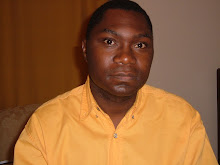
When I attended a full day workshop on Participatory Rural Appraisal (PRA) two years ago at the Senate Lecture theatre, University of London; little did I know that the facilitator himself Robert Chambers is the most distinguished figure that has published extensively on this topic and is referred to as the guru of “PRA”. Had I known, I would have paid more attention to his teachings and this would have made my life easier today. I am struggling to read about this PRA now and had to attend other workshop to increase my skills on PRA. Well, what is this PRA? Unless you are someone who is interested in the community and research, this word is probably of no meaning to you and will not affect your life anyway. But for me, unfortunately this is what I have to deal with every day that I will spend in the community; fortunately Prof Chambers has provided guidelines on what is all about and how to conduct PRA. Robert Chambers describes PRA as "a family of approaches, behaviours and methods for enabling people to do their own appraisal, analysis and planning, take their own action and do their own monitoring and evaluation." (Chambers, Participatory Workshops, 2002) The methods are open ended, participatory, and often visual as well as verbal. PRA processes have facilitated the process of development in many contexts, rural as well as urban. According to my reseach project (finding blind children in rural Malawi )and possibly helping them; PRA offers a method of engaging the community to identify where those children are; shed more understanding as to why the don’t come and finally for the community themselves to find ways of identifying (finding) the blind children and making them come to me so that I offer eye services. It seems Robert chambers has given solutions on what I need to do next in Malawi; and fore sure I am about to embark on PRA methods to find blind children in the Southern Part of Malawi. Are you surprised? Well Robert chambers is one of the most quoted authors that you will find on the internet .And if you dont hear his name when you read any paper on PRA methods,I can bet a few dollars with you .If you find a scientific paper on PRA that has not mentioned Chambers or referred to his work in the literature , I promise to bring to your attention at least 300 articles that have referred to him. And I will be writing more and more about PRA methods and blind children; as that is my next area of research. Write now I am looking for someone with PRA expertise who can help with conducting a PRA workshop with my staff in Malawi .But one day you will hear that Dr Khumbo Kalua, the local doc from Ezondweni, Mtwalo, Mzimba,Mzuzu, Nothern Malawi is one of the few medical doctors with expertise in PRA. . As for now are you available to help , or do you want to comment? Email me!
Wednesday, 26 November 2008
Participatory Rural appraisal (PRA)
When I attended a full day workshop on Participatory Rural Appraisal (PRA) two years ago at the Senate Lecture theatre, University of London; little did I know that the facilitator himself Robert Chambers is the most distinguished figure that has published extensively on this topic and is referred to as the guru of “PRA”. Had I known, I would have paid more attention to his teachings and this would have made my life easier today. I am struggling to read about this PRA now and had to attend other workshop to increase my skills on PRA. Well, what is this PRA? Unless you are someone who is interested in the community and research, this word is probably of no meaning to you and will not affect your life anyway. But for me, unfortunately this is what I have to deal with every day that I will spend in the community; fortunately Prof Chambers has provided guidelines on what is all about and how to conduct PRA. Robert Chambers describes PRA as "a family of approaches, behaviours and methods for enabling people to do their own appraisal, analysis and planning, take their own action and do their own monitoring and evaluation." (Chambers, Participatory Workshops, 2002) The methods are open ended, participatory, and often visual as well as verbal. PRA processes have facilitated the process of development in many contexts, rural as well as urban. According to my reseach project (finding blind children in rural Malawi )and possibly helping them; PRA offers a method of engaging the community to identify where those children are; shed more understanding as to why the don’t come and finally for the community themselves to find ways of identifying (finding) the blind children and making them come to me so that I offer eye services. It seems Robert chambers has given solutions on what I need to do next in Malawi; and fore sure I am about to embark on PRA methods to find blind children in the Southern Part of Malawi. Are you surprised? Well Robert chambers is one of the most quoted authors that you will find on the internet .And if you dont hear his name when you read any paper on PRA methods,I can bet a few dollars with you .If you find a scientific paper on PRA that has not mentioned Chambers or referred to his work in the literature , I promise to bring to your attention at least 300 articles that have referred to him. And I will be writing more and more about PRA methods and blind children; as that is my next area of research. Write now I am looking for someone with PRA expertise who can help with conducting a PRA workshop with my staff in Malawi .But one day you will hear that Dr Khumbo Kalua, the local doc from Ezondweni, Mtwalo, Mzimba,Mzuzu, Nothern Malawi is one of the few medical doctors with expertise in PRA. . As for now are you available to help , or do you want to comment? Email me!
Labels:
Blind Children,
Chambers,
ezondweni,
Khumbo Kalua,
Malawi,
mtwalo,
PRA
Saturday, 8 November 2008
Malawians in London: I got You .Lucius Banda playing at Islington Acameny in North London on Sunday 9th November:
Finally I have found means of tracking where the Malawians hang in London and I will try to find them .My purpose is to associate with them and see what they are up to and maybe engage some of them to fund for the community work I am doing in Malawi or ask them to do the same.
You remember, for the last 3 years that I have been moving up between London and Malawi (after I left Manchester in early 2006),I have been asking where are all these Malawians who are supposed to be in London ? While on the tube (train) or buses if you look front or backwards, left or right all you see are the Nigerians and proudly enough our African counterparts have the courage to speak loud in their language ,so you can not mistake them for Malawians .But I have not heard Malawians speaking Chichewa on buses. I was once told there were many Malawians in East of London (Stratford ,Leyton and Hackney );I stayed there for 6 months and I didn’t see any. Now I am in North London (Seven sisters ,Finsbury park) and I have held this is where the home of a famous and rich Malawian called Mr Chair is ;but I haven’t met any of his family or bodyguards. And if you do see a face that looks like a Malawian and you try to talk to them; they tell you sorry, I am from Zimbabwe and we are neighbours. I miss the early 90’s when I was in the earlier part of my studentship in Adelaide South Australia as we used to know everyone from Malawi and visit each other and gossip about the then life president Dr Kamuzu Banda (we couldn’t speak loud because we had spy’s amongst us and if reported one could be deported back home, in Ezondweni, Mtwalo, Malawi) ;those were the good days !!! I also remember the late 90’s where I was in Nairobi, Kenya as a mature postgraduate student (now I have over matured) and when I was the vibrant treasurer of AMAKE(associations of Malawians living in Kenya)and we could organise parties and raise funds for Malawi whenever there were floods in lower Shire .Having come to the UK (on an over matured student VISA) and having heard that there were many students, nurses, Drs ,watchmen, carer takers and cleaners ,I expected to find a strong vibrant Malawian community but I was wrong.
After many unsuccessfull attempts I decided to goggle search on some common Malawian names like David Banda, Mkandawire and Phiri in london ;and guess what I found ; that the famous Malawian musician and honourable Lucius Banda with his Zembani Band is playing tonight in Nottingham the 8th of November and on Sunday the 9 in North London at Islington Academy ( a few miles from where I stay).Alas, atleast I know where you Malawians hide and I am going to check on you tomorrow ;I am not going to miss this show ;even though its costing £30 per head ( that’s my monthly budget for food in Malawi).But if you thought that by raising the prize you would put me off you are wrong; I will be there .
And I am going to report about that stuff you didn’t want people in Malawi to know about ;and I am going to dance too .
Are you disappointed ? Surprised ?
Email me!
We celebrated World Sight day in Blantyre, Malawi on 11th October 2008
World Sight Day was set aside by International Agency for Prevention of blindness(IAPB) and VISION2020 to celebrate the VISION2020 “Right to Sight” initiative .The day is commemorated on the second Thursday of October .
This year BICO organised a series of events to celebrate this day in Blantyre ,Malawi .Firstly we did put radio adverts informing people about what this day was for ; and then we announced that for two consecutive weeks we would be picking and operating for free on all blind patients (adults & children) whose sight could be restored .We scheduled operations in Blantyre from 6th-10october at the Lions sight fisrt Eye Hospital and in Thyolo from 13-17th October at Thyolo District hospital. We printed t-shirts and distribute t-shirts, and made banners which were displayed in front of the hospital .The period was so busy that in total we had over 100 patients operated and have their Sight restored.Thanks to all staff who participated in this exercise .You can see from the pictures - the banners and the faces of happy patients who had come to the hospital blind and were able to see.You can also see me in front row wearing a white lab coat and displaying the banner; a rare glimpse and lucky you!
The national celebrations took place on 18th October at Thyolo community ground and the guest of honour was the minister.
Blantyre institute for community Ophthalmology (BICO) is proud to have been associated with this event and would like to thank our partner and sponsor Sight Savers International Malawi office .
We would like to do more of these operations in future to help the poor Malawians; That’s what community Ophthalmology is all about and that is my role as a Community Ophthalmologist .
Do you want to help or be involved? Tell us how
Or do you want me to quit and join politics?
Email me!
Labels:
BICO,
Blantyre,
Community Ophthalmology,
Eye doctor,
Malawi,
World Sight day
Teaching Key informants (local volunteers) in identifying Blind Children in Mulanje
I am back with more field news from Mulanje, Malawi .That is the problem of being a community eye health specialist; you always want to put your community first and expose them. You are probably aware that my interest is in identifying and helping blind children from the rural areas of Malawi. How we are doing this is through Research that is being conducted in Blantyre under the umbrella of Blantyre Institute for Community Ophthalmology(BICO) ; and I am one of the founding members of this organisation. Basically what we do is that the Project coordinator communicates with the Clinical officer in a particular district (for now Mulanje);the officer together with the District environmental/Public officer go to the village chiefs and asks them to identify what we have called key informants (but the are volunteers) who may be willing to give time and be available to identify blind children. Once the list is combined ,a days training of how to find blind children is organised within the community ;after the session the key informants go and find the children ;and myself and the team go and examine those children within their villages 6 weeks after the training .


Recently in September I was privileged to have 2 of my Optometry externship students from Canada (I will tell you later how this is possible) come along to observe the training which was being conducted at Mbiza Health Centre in Mulanje .We trained 23 volunteers and the training was conducted in the vernacular language (Chichewa).
As you can see this was an exciting moment. In the picture you see the clinical officer teaching the volunteers.
What was the result of this training session? And where does the Research come in? Find out later.
Do you want to know about eye services, blind children or any interesting thing about people in the community in Malawi?
Or do you just want to comment?
What do you think?
Email me!
Recently in September I was privileged to have 2 of my Optometry externship students from Canada (I will tell you later how this is possible) come along to observe the training which was being conducted at Mbiza Health Centre in Mulanje .We trained 23 volunteers and the training was conducted in the vernacular language (Chichewa).
As you can see this was an exciting moment. In the picture you see the clinical officer teaching the volunteers.
What was the result of this training session? And where does the Research come in? Find out later.
Do you want to know about eye services, blind children or any interesting thing about people in the community in Malawi?
Or do you just want to comment?
What do you think?
Email me!
Labels:
BICO,
Blind Children,
Eye Hospital,
Malawi,
Mulanje
Wednesday, 29 October 2008
The Fight for trachoma must go on in Malawi

Just about 3 months ago we were busy conducting the research to see if trachoma eye disease was still a disease of public health importance in Malawi .Trachoma ocular infections are transmitted by flies ;and recurrent eye infections leads to frequent eye disease ,lid scarring ,eye lashes turning inwards and rubbing on the cornea and finally causing blindness.
We have verified that Trachoma is still a problem in the two districts that we did the survey (Chikwawa and Mchinji) ;and now we need to plan on how we are going to fight this disease. Trachoma is primarily a community disease and a disease of poverty ;and our emphasis should focus on strategies that overall improve the health and social statuts on people involved .As a community Ophthalmologist ,I am taking this matter further up with the ministry of health and the supporting partners that we should have a national Trachoma control Programme (we never had one);which should lobby for national trachoma eliminations activities .
Are you interested in Trachoma? Do you want to find out how you can help fight this disease?
Email me!
World AIDS day 2008: Shopping day in London

Remember 1st December is Worlds AIDS day dedicated to all those who have lost their lives to HIV/AIDS. And this year the day falls on Monday .As for London Oxford Street this is one of the busiest day for people shoppingas this is the first day when the new cheaper VAT tax rates will be put in place.Well ,due to the global recession and crdit card crisis the British prime minister has lowered VAT from 17% to 15% so things will be much cheaper starting today.
As a result I do not expect to see the red ribbons symbolising the AIDS day; and no one cares about what the day means.After all AIDS is still mainly an African problem,as is hunger and poverty.
I normally take time to reflect on this day, and remember the many relatives I have lost to HIV/AIDS among them my only uncle, my brother, and many cousins. I also remember a colleague doctor and classmate we lost a few years ago while I was still a junior Dr . Recently in Malawi we are seeing more and more of eye diseases that are HIV related and I can for see that in the next few years the focus of eye doctors like me will be on HIV related eye diseases. I am not looking forward to abandoning my community work especially working with children.
Last year I went to the centre of London town to take some pictures; but this year due to the bad weather I am not sure what I will do ,maybe call family in Malawi and cheer them up .I am home seek and the weather depresses me more; and not only me but everyone in London suffers some form of depression due to the weather.
Unfortunately “AIDS” is here to stay.God help us!!!
Have you lost someone you know to HIV/AIDS?
Email me!
Early winter: Its very cold in London
Well I woke up at night freezing wondering what was going on; the heater was still on but I was feeling very cold. I looked at the window bit all I could see was the vehicles parked on the street covered with snow. But why snow on the 28th October; I wondered!! I thought winter has not yet started; we just changed the clocks on Sunday (3 days ago) .
In the morning it was obvious the winter had started, the temperature was only 2 degrees. The newspaper reported this is the first winter in October since 1934.
As I sat on the train to work I was wondering why I was here this time; I should have been back in Malawi where the temperatures are very warm ;This is the 5th consecutive winter I am spending time in the UK,not fair.
I can’t wait to get back to Malawi and continue with my Eye community work.
I will go and look for winter clothing tomorrow.
How is the weather where you are ?
Email me!
Subscribe to:
Posts (Atom)