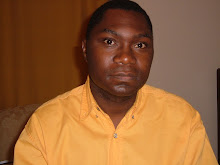
It is that time of the year when we gather together with families and celebrate the birth of Jesus Christ I am particularly privileged to be at home in Malawi this year with my family .Last year I spent Christmas in Rwanda ,was conducting a survey of trachoma .This year i get to know a bit more about my daughter Tapiwa.
All I can say is that the Lord be praised for keeping me healthy throughout in 20009, and I do not take it for granted .if you are in Malawi you would know how many well deserving people have left this country (died) ; most of them if given a chance would have loved to go on with their lives . But I was among the many chosen not to be a statistic (at least for this year) .I believe I have served him better.
The scarcity of fuel remains a big issue in Malawi; thanks to our politicians.
As from BICO, it is my hope that several people that I operated on will have sight to see this Christmas properly and that I will be helping many more in the New Year.
By the way, I plan to update my blogging profile in 2010; am just keeping my fingers closed.
God bless
Email me!
Showing posts with label Rwanda. Show all posts
Showing posts with label Rwanda. Show all posts
Monday, 21 December 2009

Thursday, 15 January 2009
Rwanda organised
After informing a colleague by a text message that I was in Rwanda for a few weeks and giving them my number I got the following reply.
“I don’t care what you are doing there, but I honestly wonder why out of all places in the world you would end up in troubled Rwanda” Why are you deliberately putting your life in danger ?
I must say I felt like this the first time I excepted to do the assignment in Rwanda and also when I landed at Kigali airport.
However, having visited a number of African countries I must say I am impressed with how the system is well organised in the post conflict Rwanda and how safe it is to be in Rwanda at the moment. Well for a start when I arrived in Kigali I was expecting chaos but I had a smooth first day with a warm welcome.
I thought security was a big issue but was surprised that people can walk freely at night (and I did so too all the time I was there; tried to do this once in Nairobi Kenya and I was mugged!!!!).
After spending the first night in Kigali at Iris Hotel I was ready for my assignment which involved talking to people. Upon enquiry I was told that every one had a national identity card and that the law was very strict and required you to be able to identify your self at all times.
I also learnt that every worker had a social security number and also a health insurance number and that these three were linked up in such a way that if you only gave one number to authorities they would be able to find out everything about .This system was not only limited to people in cities like Kigari and Butare but also to local villages. Interestingly everyone in Rwanda had a health insurance and they were able to pay for all their family members.
Most importantly I enjoyed the various amount of food that they have.
Well Rwanda is not as bad as we all think. But they must market themselves more to the outer world to be known that there is peace.
Meanwhile I have returned to Malawi
Have you been to Rwanda?
Email me!
Sunday, 14 December 2008
Merry christmas and happy new year from BICO


Greetings from Kigali,Rwanda! A few pictures (kigali motorcycle taxis) for you to view
On behalf of all of staff of Blantyre Institute for community Ophthalmology (BICO) in Malawi, I would like to wish you a merry Christmas and a happy new year 2009.
Since the launch of BICO in mid 2008 with the mission of contributing to the prevention and control of blindness in Malawi through conducting practical research, teaching, training, consultancy and advocacy in eye care delivery, I have been on the run up and down to make things moving. A lot of thanks should go to BICO’s project coordinator, Ruby who also worked hard to put all logistics in place.
As a blog from Kigali ,Rwanda where I am conducting the last BICOs assignemnet for 2008 and where I will spend my Christmas and New year, I would like to thank all of you who have supported us in either reading this blog and sending comments ,or giving us some work to do .
This year our major research achievements included the childhood blindness pilot project in Mulanje, and the Trachoma prevalence survey in Malawi.
The idea to start BICO was conceptualised after realising that despite nearly 10 years after the launch of the VISION2020: THE RIGHT TO SIGHT the global initiative to eliminate avoidable blindness and the various successes/ achievements in other areas of the world; Malawi has still not made much progress especially in the area of research on practical preventative community eye care blindness programmes.
Within a year BICO has spreads its wings across the border and helped in capacity building in Malawi and other countries
The centre aims to conduct and disseminate findings of research being done eye care professionals and other stake holders in the region and transfer the best of its expertise and experience to an ever-increasing number of eye care institutes across Southern Africa. The centre will strategically be located within the University of Malawi College of Medicine teaching eye hospital, the Lions Sight first eye hospital in Blantyre.
The planned activities of the institute contributing to eye care in Malawi and other neighbouring developing countries can be broadly classified under the following areas:
• Capacity building of community eye care health workers
• Training Programmes – focussing on community eye care delivery
• Research capacity building through conducting practical local research (operational and health services research )
• Publications
• Consultative support to countries with no expertise in community eye health
• Advocacy and contribution to Eye Care Programmes at National and International level through the Government and International NGOs.
• Fund raising for eye care service delivery
BICO as a centre within the Lions Sight Eye hospital, College of medicine, University of Malawi, Blantyre will work closely with the collaborating Community Ophthalmology centres within the region (Kilimanjaro Centre for community Ophthalmology-KCCO in Tanzania) and also with International Centre for Eye Health (ICEH, London); which continues to take a leading role in developing Community eye health workers for Africa and elsewhere.
Subscribe to:
Posts (Atom)