Showing posts with label Eye doctor. Show all posts

Thursday, 24 March 2011

Mzimba Secondary school alumni memories


Twenty seven years ago(1984) I was selected from St Peters primary school in Mzuzu to join mzimba secondary school as a form 1 student. Little did I know what that meant and what the future had for me. I arrive at the school and I am welcomed by my cousin (late Billy Nyirenda) and I am told I will be sleeping at Nyika Hostel BOX 1.At night, unknown men come to tease(bit and mock us) and at 3 am we are awakening to clean up the toilets. Crying every day for a year.
Later in 1988 I finish form 4 (high school) and I am selected to go to chancellor college University of Malawi . A few years later I am studying in Adelaide Australia , then college of medicine Blantyre, Univeristy of Nairobi, University of London and finally University of London.
This weekend (26th March 2011)I will be going back to Mzimba secondary school with other students who have passed through that school to refresh memories dating back to almost 3 decades and give a career talk to the students that are currently there. My wife and two sisters all also passed though the same school and so we will be going as a family.
Well I want to stop blogging but with life changing results as this one who would not want to talk about it.
A big thank you to all my teachers at Mzimba. Here I am as a community eye doctor in rural Malawi, yet when I left Mzimba I thought I would never be affiliated with the community (regarded as remote) again.
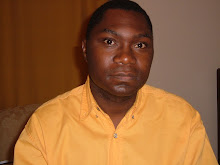
I have recalled my earlier pictures at Mzimba taken in 1986. I can’t even tell which one is me.Contrast with first picture -how i look now in a suit and glasses.Those were the good old days in Mzimba.I wouldnt have made it on my own-the secret is that God has been on my side all the time.i am not sure why i have been prevedged.

Thank you to all the gents and ladies who decided to have an alumni –you’ve made my day.You can check mzimba secondary school alumni association on the facebook .

To find find/lean a bit about my work in Malawi as an Ophthalmologist(Eye Doctor) click here at Blantyre Institute for community Ophthalmology .

Got to go will be travelling later during the day.

What do you say?
Email me!

Friday, 17 September 2010

Malawian Doctors reluctant to go for Post graduate specialization studies in Ophthalmology at College of Medicine?.


I recently had a chart with some doctors who graduated recently from College of Medicine ,University of Malawi and they indicated that it is us the old doctors who are suppressing them from progressing with the careers in that we do not fight much for them and demand that they go for more specialized studies .They think having got a first medical degree they should be driving porch cars and leaving in low density areas with swimming pool, blah , blah , blah. I still do not have either of the two .
Having completed the first medical degree, most graduates expect things to be put on a silver platter from then onwards but this is rarer the case .Ask them about doing postgraduate studies to specialize in Ophthalmology , and they are not interested .
Post graduate studies these days are a must in the medical field if one wants to make a successfully career.
For example for the last 8 years I have been busy conducting community eye programmes, but none of the young doctors have approach me to know about the career and the benefits and no one is interested in following my footsteps . So why should be they saying we are suppressing them when we do not have anyone to handle the responsibilities to. I have no intention of going on for the 3rd term in community Ophthalmology but circumstances will force me to do so. BY now another Malawian doctor should have been graduating yet there is one in training ? I have two scholarships in Ophthalmology with me yet no candidate is coming forward .Is is because they see me driving a debilitated 3rd hand used motor vehicle and staying in substandard high density Baluti Area in Blantyre ? I am tempted to this so .Well I still love my car .
All in all Ophthalmology is not marketable in Malawi (but also in most parts of Africa) because young doctors believe it does not pay well as a career. Much as financial incentives are important , many other non monetory incentives can lead to job satisfaction in Ophthalmology.
It takes four years to train as an ophthalmologist at College of Medicine in Malawi once you have qualified as a general doctor , and most doctors feel this is too long But its not!
Having been at University for almost 2 decades as a student (I was in 1st year University in 1988, but now I am in final year Research PhD after having done 4 years of Ophthalmology then Masters in public health ) I do not regret any bit of it .I had a successful academic progress and my research career is just starting now.
Well for those who want to do any more studies, four years isn’t too long .Ask me how I managed and I will share the tricks .
If you dont join us , we will remain in power.
Know any Malawian doctor who may be interested in ophthalmology?
What do you say?
Email me!

Sunday, 9 May 2010

Unrealistic expectations


Well, it’s a million dollar question!! How do you tell this young blind child that when he grows up he will not be a soldier or a doctor as he wants .At-least not in Malawi and not a child from this rural Phalombe area . You see my mission to Phalombe was to visit the blind and visually impaired children at Nazombe primary school , in Chirunga, Phalombe which is situated near the Malawi Mozambican border .I have found the 15 blind children ; all in school and with a lot of aspirations ; two in particular want to become come a doctor and a soldier respectively. They are both learning at the school in Braille .For medicine I suppose you can go a long way with Braille ; but there is a lot of skills needed that it would be impractical for a blind child in Malawi to continue with the course .for the military , there is a lot of hard exercises and heavy duty work ; which in my opinion a blind child cannot cope up with .But here I am as a mentor , trying to encourage these children not to quit school , so how do I tell them you will never be a doctor or soldier ; that would demolise the children .
I am aware that now we talk of inclusive education; where the environment is modified to suit the blind child’s needs.I have seen this in UK , mainly at one blind school that we visited in Scotland ; and a budget of millions of pounds is needed every year to support such children .Malawi is too poor, so policy makers would not push for the move to put billions of kwacha just for the education of the few blind children .Its a moral dilemma , and I am not sure which side to follow .
Well, the truth is that all children need a decent education(whether blind or not) and that at the moment only 20% of blind children are attending school .
Do you want to suggest what can be the solution?
What do you say?

Email me!

Tuesday, 1 December 2009

Fuel crisis in Malawi affecting Blind people in Thyolo and elsewhere


You are not the only one wondering how this can be possible.
What do young and old blind have to do with fuel crisis in Malawi? After all they are from the rural areas of Malawi, never had a driving license in their life; and will never drive .More over they rarely see vehicles in their community.
The first time I heard that there was no diesel in Malawi was about four weeks ago when I was doing my research in Thyolo ; to be more specific around Bvumbwe area .When I went to the diesel station at Bvumbwe there was a lot of diesel around ; and I was told the problem was only in Blantyre. Continuing with my journey I visited villages around Bvumbwe health centre hoping to learn some Lomwe ; only to be told that the traditional authority (TA ) Bvumbwe is a Ngoni descent from Ntcheu and that all his people are Ngonis (did you know that?) .For me , my assignment was simple , to examine the blind and visually impaired so didn’t care whether you were a Ngoni or Lomwe (Muhlako ; as long as you were blind you were my client ) .We anticipated that we would harvest around 200 blind people from Thyolo and that they would all be helped through a sight restoring operation schedules to take place in Blantyre at Queen Elizabeth Hospital .
The next few visits were scheduled for Ndata farm, Makande tea estate, Luchenza, Mangazi , Boidi , Kwethemule ,Mauwa and Chitimbe and we were going to be there for at least 10 days . But we did not complete the work, only stayed for 2 days and I have not been back since then. Will tell you the reason why! Fuel crisis.
I overheard some people discussing that the present lack of fuel in Malawi was due to shortage of forex ; but with my ageing grey matter I could not figure how the two were related (excuse me , I still haven’t yet figured how ) . It was of course a relief when I heard the high authority announcing that the crisis was due to Mozambican Government blocking the passing of trucks with fuel from South Africa to Malawi and this initially made some sense to me .But eventually I started wondering that for my 40 years that I have been in Malawi (perhaps more important for the 16 years that I have been driving) I have never heard of a fuel crisis in Malawi ; even during worse days when Kamuzu the other “Ngwazi” was in bad books with Mozambican president the late Samora Machel ;we still had fuel in Malawi .At that point having smelt a rat , I decided to stop thinking about why we were having fuel crisis and concentrate on seeing my patients in Thyolo. After all, being a senior citizen and doing good work to help the poor and the needy, I did not think anyone would deny me fuel to go to the field but I was wrong again (excuse me I am old).
Within two days the fuel crisis had accelerated, and all diesel in Thyolo and elsewhere was gone.
I tried to maneuver around using my influence (“good” corruption) but could not succeed in getting fuel anywhere.
Unfortunately all Chiefs from areas scheduled for visits were told to mobilize and gather patients at particular places on the given dates; and with this fuel crisis everything came to an end .
I have been rendered a liar ; have had people calling and asking when the trips will be rescheduled, and as long as the current situation continues I do not see myself doing any more community work.Please do not arrest me for my freedom of speech.

I am still drawing my small salary and working in Blantyre (I dont think I should stop) , but of course I am no longer going to the field as a Community Ophthalmologist.So do you now see how the blind from Thyolo and elsewhere have been affected by fuel crisis? Unfortunately they do not have anyone to speak for them; some of us may lose our jobs for being their advocate.
I can be sacked for other reasons , but not for my incompetence, because I am not the one responsible for the fuel crisis.

Meanwhile I have time to sit down at the lake and take some drinks while I wait for the numbers of blind people to continue rising up. Hopefully with the good policies of the current Government (that I fully voted for and support) that gives enough free fertilizer to all its citizens (compaired with only a starter pack from the previous Government), those blind should still be able to farm and get a bumper harvest next year. Otherwise I instead of the “fuel” crisis may be blamed for not having visited them and advising them to go for an operation, yet I know they can see again.
I rest my case on fuel .

Any good advice on what I should do?
Or do you just want to comment?

Email me!

Monday, 23 November 2009

Primary Health Care (PHC): Fantasy or reality for Malawi


From the recent political blog, I am back to my senses after sobering up and ready to report on more community work. Today I am writing about Primary health Care, PHC in short.

There is a long definition of what PHC is supposed to be as given by World health Organisation: (WHO, Alma Ata Declaration. WHO1978 p.3-4) that includes 5 sets of principles, viz: affordable and sustainable health systems development, appropriate(user friendly) technology, intersectoral collaboration, community participation ,and equity to access of services –whatever these mean!!! “Remember the Health for all by the year 2000” this was one of the WHO initiatives that was going to use PHC.
Heard about Millennium development goals (MDG’s) - most of these need PHC to be achieved.
So why is an eye doctor in the forefront talking about PHC? Well, for your information we are supposed to be integrating primary eye care (PEC) into Primary Health Care (PHC).There is now renewed call by “WHO” for implementing PHC in developing countries.

But how are countries like Malawi doing on PHC at grassroots level? This is a political question so need to be answered by politicians; but I will only be giving my views based on my experiences with the communities mainly in Southern region of Malawi. For this blog I will concentrate on my experiences during my recent visit to Mangochi district.
Fact 1 : Health Surveillance Assistants (HSA’s) are the main provider of primary health care in all communities in Malawi .I was introduced to this group of workers in 2007 when I started my research in eye care and since then I have interview over 200 HAS’s and trained about the same number on primary eye care. They fall under two levels of employment by the Government; those employed before 2007 –referred as normal HSA’s and those after July 2007,referred as the Global HSAs’s (because they were deployed under the global fight against HIV/AIDS initiative).They all are supposed to undergo a 10 week orientation training in everything (preventive ,curative and rehabilitative services) and then attend other on-job trainings .
Fact 2: At most 50% of all HSA’s recruited in 2007 have not after 2 years formally attended their 10 week training in Mangochi, Zomba and Mulanje and are actively doing their day to jobs without training .
Are we sure these personnel are doing what we intended them to be doing? Are they doing standardised procedures?
Fact 3: Some of the health centres with a catchment area of higher than 10,000 persons have no medical assistants, or nurses and are left to be taken care by HSA’s who attend to and treat all sorts of patients including maternity patients . I witnessed this in Mangochi at a health centre I visited to screen blind children , I was told there was neither a nurse or medical assistant there ,the senior HSA was in charge and was doing all the clinical work (and he was staying in a beautiful institutional house that would have been used by the nurse of she were there)
Can these HSA’s treat patients even if they were trained for 10 weeks? Is this what PHC is for Malawi –HSA’s taking place of medical personnel?
For once they are not recognised and registered by any nursing or medical body in Malawi ,yet they are doing what they are not supposed to be doing .Is this what PHC is all about ?
In my view one cannot be qualified to offer medical treatment when they are only high school (secondary) leavers and have only attended 10 weeks orientation.
Fact 4 : the Maternal mortality (number of mothers dying in child birth) for Malawi is the highest in the world ; the same non trained HSA’s are supposed to be in the forefront in preventing these deaths.
Are you surprised therefore that the numbers of mothers dying is not reducing in Malawi (unless we start cooking up the figures so that they shrink)?
These HSA’s are underpaid, have poor skills and are not clinically supervised. They can only be motivated to do best by improving these?
PHC is supposed to be strengthened at grass root /community level; this is definitely not the case in Mangochi. I visited some health posts and health centres in Mangochi where they had not had any supervisory visits from the district hospital since the start of this year. In another busy health centre, I found an intern (trainee medical assistant ) running the hospital after being posted there 8 months ago; he told me he had never been supervised or told what he should exactly do.
Unless our leaders invest wisely in PHC in Malawi; we are doomed to fail.

Remember “Failing to plan is planning to fail”

Those who believe and say that we are achieving a lot through PHC should go and spend time in the communities and witness what is happening there; we may be making some progress , but some of us have collected figures that prove the contrary .Show me your statistics ,and I will show you mine. I was very optimistic about PHC when I started my research, now I have become pessimistic.
Do you more data from me?
Do you want to debate?
Or do you want just to comment?

What do you say?
Email me!
Check for my next blog? Which MDG’s can be achieved by 2015 in Malawi?

Saturday, 25 July 2009

Pirates are hijacking my blog


Who would think someone would want to pretend that they are me and even try to post blogs on my site on my behalf .And what would be their motive behind all this be?
These are the questions I am being faced with but it is true that someone has attempted to hijack my blog and post articles which would not be my favour. Defamation of my character is a possible reason for their attempt.
My advice is that if you see a blog with blasphemous words (uttering bad names /things against god) or swearing words on my site, know that the blog has not been posted by me and contact me immediately to remove it from the site .Blasphemy and swearing are not in my character , and I would not want to be associate with such words .
Today I did come across evidence that someone is tampering with my blog and have reported to the responsible authorities.
Honestly, Blogging is free, why can’t you just create your own blog if you are not happy with what I write .Alternatively, why bother reading my blog when there are so many things out there to be done.
The blog is here to say even if it doesn’t please other people. Anyway, am sorry, it was never meant for such a purpose.

On another note, some days are not meant to be good. In addition to being hijacked on my blog Imagine recently I was charged one Euro (approx 1.4USD) to use a toilet in a shopping mall called PRINTEMPS in Paris, France. I asked where I could get a free toilet to wash my hands and I was told forger it, it doesn’t happen in Paris .So I reluctantly paid and decided to spent a substantial amount of time in the toilet ,to get value for my money .

Life is much simpler there where there is less technology and development like rural Malawi ,thus why I am going back to the field in Mangochi next week.

What do you say?
Email me!

Wednesday, 22 July 2009

I must admit I have limited professional skills


Thanks for your enquiry .I will be lieing if I say as eye doctor I know everything about eye diseases and community health workers. If I did, I wouldn’t still be studying in London trying to get more skills. The truth is that my expertise is limited to eye diseases in the tropics and also to those affecting the poor people. Please do not ask me things that are beyond my capacity like requesting whether I can do laser eye surgery on you.

And I am not the only Ophthalmologist or the cleverest one in Malawi .there are many colleagues who have better skills than me, and I continue learning from them.

I can also not give the accurate information about other diseases like HIV and malaria in Malawi. There are other people who have expertise in this area and I would be willing to direct you to them.
But if you want to know about blind children in the rural areas of Malawi and how community health workers can be used to find them, am willing to share with you my experiences .

Email me!

Monday, 20 July 2009

Wish I could write a book


Ignorance is a disease; lucky enough some of us know and acknowledge that we suffer from such a disease. For once I wish I was a writer, but I know I am useless when its comes to putting words on the paper .If I did not how to write I could write a few books about all these ideas I have in my mind, books such as “guidelines for training health workers in Malawi”; “Eye diseases and their prevention in Malawi”; “How to make money while working for less hours ” and many other books.But God did not bless me with such talent ,so everytime I decide to start writing a book I write a paragraph and my head goes blank. As an alternative I have ended to writing blogs –which I still do not do well. But why is this the case ? You see I am always in the field seeing and experiencing all these things, and I tell myself when I get home I will write them up but I don’t.I wish I could be at least a better blogger ,if not a writer .Has this got something to do with my origin or culture?

Is there anyone there who can give me good tips ? easy ones and not referring me to books and blogs to read .Sorry I do not have such time. Unless your blog is talking about blind children ,or poverty in the rural villages in Malawi ,I am unlikely to read it.

I will be waiting for your email .Right now in my head I have all these wonderful ideas about what could be done to the primary health workers in Malawi but cant just spell them out .On the contrary I have noted that when it comes to going to the filed to do the work I am the one who packs the bag first .Its a pitty that so much is done ,but only the tip of the iceberg is reported.
Any suggestions on what could be done ?
What do you say?
Email me!

Monday, 4 May 2009

Death of MOOP: the biggest causality in eye care in Malawi resulting from the global financial crisis


I have been quiet for a few months as rumours kept on circulating that the biggest project I was associated with in Malawi was going to stop. Its now official, I would like to announce the death of the Malawi Ophthalmic outreach programme (MOOP) whose sudden death of that fateful day of 31st March 2009 has left some of us with more questions than answers. Some of them are philosophical and include issues of brain such as “Is it worth for Malawi doctors to stay in Malawi rather than follow where there is greener pasture?”

MOOP has been in Malawi for many many years , had reshaped itself over the years but always survived .In the 70’s and early 80’s Prof Moses Chirambo,the only Malawian eye specialists enjoyed the support of Blue peter and Royal commonwealth society for the blind from UK , which later become Sight Savers International (SSI) .Under their funding he went all over the country with those old landrovers ,operating on the blind and making them see. He impact was well known that in 1983 Malawi established the ophthalmic training school catering for the SADC countries but also for other countries in Africa was well .The focus of this school was to train local eye surgeons and under this initiative ver 65 eye surgeons from 20 countries in Africa were trained.
In 1997 MOOP was restructured and secured through Sight Savers International large funding from EU which made the programme expand. The country was divided into five zones and vehicles for mobilising cataract patients were bought for each zone and several eye camps were organised in many districts benefiting the majority of Malawians. As a young medical graduate I saw what MOOP was doing and decided that Ophthalmology field was going to be my destiny.

Today as I contemplate committing suicide after hearing that SSI has dropped supporting MOOP and that there will be no future outreach eye camps in Malawi, I can not just see what life will be for me in Malawi. Why? When I come back to Malawi as an Ophthalmologist in 2002 and settled in Blantyre MOOP had a lot of funding and asked me to organise as many camps so that we could operate on many patients. I travelled the whole year of 2003 from Karonga to Nsanje and operated on over 2000 cataract patients on that year alone restoring sight .Infact it was communicated to the ministry of health headquarters that all eye care activities in malawi were to be supported by SSI through MOOP and the ministry was delighted

Thats the year (2003) that I felt the biggest impact of working as a doctor in community and vowed that as long as I was in Malawi I would give a substantial part of my time to operating in the rural areas.My whole blog is full of stories of where I have been with MOOP, and it still hasn’t sunk to me that MOOP is dead,but why? Well I was in the UK when the stories of the global financial crisis started emerging, and we were discussing that Malawi being a poor country, we would not notice the effects of this crisis .Honestly if I knew this was coming I would have made a decision to stay in UK and work there .Here is a doctor and his team who are ready to operate on many blind patients who are out there, only to be told because of the financial crisis ,those patients can hung? So what will I be doing in Malawi? Is there a reason for continue to stay in this country when you have a valid 5 year VISA for the UK? I don’t know but I believe God has plans for everything and maybe he is asking me to move from Malawi.

I rest my case for you to judge.

+ MOOP rest in peace RIP.
Born 1971
Died Prematurely 2009
MOOP, how could you have gone so early at the age of 38?With your departure some of us have no purpose in life and we are contemplating on changing continents. What will happen to the many hopeless that you gave sight to ?
We loved you, but god loved you most.

Dr Khumbo Kalua is a Malawian Ophthalmologist whose passion for the community was being served through MOOP and is very frustrated and bitter with the global financial crisis and its major effects on poor countries like Malawi. Sight Savers International is a UK based charity NGO that was supported MOOP. The decision to stop MOOP was made at short notice and centrally at policy level (SSI) without consultation of the stakeholders, the technical staff and the Ministry of Health officials in Malawi.

Can you help? Or do you want just to comment? Do you want to call me on +265 999958176 and +26588830232 in Malawi to send your condolences?

Email me!


Monday, 16 March 2009

Frequent changes in Hospital management is a sign of in-efficiency in the Health System in Malawi


My plan for this week was to meet Dr T ,the director of Zomba Central hospital and discuss the way forward for the upcoming eye hospital .I called his secretary to book an appointment ; and I am told Dr T doesn’t work for that hospital anymore ; he has been transfer to another hospital .And I ask who is now the new director ,Dr MC who was not long ago kicked out of the senior position he was heading in the ministry and sent to a district ; now he seemed to have regained his strength and be promoted again. How was he picked them to head the challenging Zomba hospital? As usual no vacancy advertisements and no interviews were held so he must have been hand picked by someone else; I do not want to speculate .But its frustrating that in my ministry of Health people are given management position not because of performance; but rather because of connections and often as a result when the one who picks them changes position , the whole team of hospital directors change and often without handing over to the new director .For some of us who want action to continue it’s a bit frustrating because when you go to meet the new director he is not aware of discussions and decisions made by the former director .No files ,minutes or any records of previous discussions can be traced ; and often you have to start from scratch. Frequent changes in Hospital management are a sign of in-efficiency in the Health System in Malawi, and these need to stop for continuity of work.

I am looking forward to working well with MC, even though he doesn’t have the slightest clue that he is supposed to be my boss and what I am supposed to be doing in Zomba. I am just preparing a whole lecture about blind children in Zomba , how to find them and what my role is and I am hoping he will have time to listen (most directors don’t) and support me . Does he know anything about centre for education of the blind? I bet not.
I will also be advising him to check on
VISION2020 website for more information about origins of my work and what we intend to achieve.

Do you want to communicate with him on my behalf?
Do you want to comment on anything ?

Email me!

Thursday, 26 February 2009

How was your day?


How was your day?
I spent time today in the eye clinic and the ward supervising my staff.There were a total of 45 admitted patients in the ward ,quet a number ?
I am going home now.
See you,

Wednesday, 25 February 2009

Thank you for your support British Council for Prevention of blindness

After being in London for a while ,I am back in Blantyre and we are preparing for the next training session of eye health workers which will take place in Zomba on Friday 27th 2009
We are training the second group of health workers to identify blind and severe visual impaired children in Malawi
I will be talking about VISION2020: VISION2020 the Right to Sight global initiative to eliminate blindness by the year 2020 and why its important that children with visual impairment are identified as early as possible This work is being supported by the British council for the Prevention of blindness, (www.bcpb.org), through the London school of Hygiene and Tropical medicine where I am partly based .
The last group of training went well ,I was busy taking pictures of the facilitators and the participants so I am not included in the photos. This was a group of volunteers from Likangala in Zomba.Unfortunatley the intrenet is so slow i cant attach any
In less than 3 weeks time we will be going back to the field to examine the children they have identified .This is the part I love most ,as you get to see the rural areas of Malawi
Well , I enjoy being an eye doctor in rural Malawi

What do you do?

Email me!

Sunday, 22 February 2009

Wishes for my outreach eye project hospital in Malawi


Its day like today when I am in transit that I find time to blog .My next flight will be in 6 hrs time so I have a bit of time to write about comments I got on my recent blog.

I did not know many people would comment on the upcoming new Zomba hospital;
And I am thinking as I get back to Malawi I should visit the hospital on Friday 27th February and see the progress My worries are on the frequent trips I am making between Blantyre and Zomba especially that I am still using the old pickup which sight savers donated 7 years ago and that its now not in a very good condition.
We are training health workers at Mayaka health centre , near Nasawa training base or Ngwelero Its about one and half hour drive from Zomba and the road is not very good. Since its still in the rainy season I am worried that if it trains that day the muddy road will be very slippery, and we may not reach there .Indeed we are forcing the old Toyota, I would wish to have a relatively newer –less used (or brand new second hand four by four ) which would be a reliable car for the project. Its harder to find people /organisations to donate a whole car at the moment as four by four cars are expensive and with the credit crunch in the USA and UK most well wishers are reluctant to give any assistance at the moment .The priorities of my Government are on Malaria, TB and AIDS, and its unrealistic for me to expect them to give a car for the eye project. Bill Gates has not yet been convinced that blindness in children is worth intervening at an early stage so he is pumping most of his money in Africa into Malaria .Well for some time we will just have to manage with the old car you can see on the picture, but we seriously have to look for the alternatives .The other day I saw a new four by four vehicle belonging to an NGO called “Water Aid”; the vehicle is a Toyota hilux double cabin and its very good for field work I was wondering how I could convince somebody to donate such vehicle for the project in Zomba.

Any idea of well wishers with an old 4 by 4 car needing to be donated ?

Or any idea of someone who may be interested in giving us a project car in future?

Email me!

Tuesday, 17 February 2009

Consultancy can be addictive


For me, helping with research and eye work in other countries had very little to do with money from the start; all I knew is that the trips gave me opportunity to see places I had never been before .I didn’t care how much per diem or consultancy fees I got, as long as I had a good sleep and good food. In return all i needed was to be dedicated to the work I was engaged to do and I needed to compile a comprehensive report at the end of the assignment. So I was asked for my availability for consultancy services in Mozambique, Zanzibar, Tanzania, South Africa ,Malawi and Rwanda I knew I would have good fun in these countries .But the outputs of such travel and work were interesting; big documents detailing the findings of the visits and several training and research curriculums were developed .It was a lot of hard work but in almost all the cases I did perform well. Little did I know that after travelling this much and doing this type of work , one gets addicted and wants to do more .But consultancies are seasonal –sometimes they are there -very wet all the time and sometimes it becomes very dry .So when I did not get asked for any assignment for a period lasting many months ,I noted that I was having a lot of withdrawal symptoms –constant jet lag , sleepless night , fatigue, boredom ,was irritable and had many other things . It took a colleague to diagnose that my being in one place for a long time (not travelling) was resulting in these symptoms and that the only therapy I needed was to get more of these trips .The result is that I embarked on a long term journey of internet searching but to my disappointment there was not much success coming with the searches .I have hence ceased active searching for consultancies (even though I still have the withdrawal symptoms) ; and my only solace is in the communities and villages I am currently visiting in Zomba and Mangochi in Malawi .

But I can do consultancy in any health and education related works-and not only in “eyes” but as long as it involves working with rural disadvantaged communities.

Any ideas of where I can go from here?

Email me!

Saturday, 8 November 2008

We celebrated World Sight day in Blantyre, Malawi on 11th October 2008


World Sight Day was set aside by International Agency for Prevention of blindness(IAPB) and VISION2020 to celebrate the VISION2020 “Right to Sight” initiative .The day is commemorated on the second Thursday of October .

This year BICO organised a series of events to celebrate this day in Blantyre ,Malawi .Firstly we did put radio adverts informing people about what this day was for ; and then we announced that for two consecutive weeks we would be picking and operating for free on all blind patients (adults & children) whose sight could be restored .We scheduled operations in Blantyre from 6th-10october at the Lions sight fisrt Eye Hospital and in Thyolo from 13-17th October at Thyolo District hospital. We printed t-shirts and distribute t-shirts, and made banners which were displayed in front of the hospital .The period was so busy that in total we had over 100 patients operated and have their Sight restored.Thanks to all staff who participated in this exercise .You can see from the pictures - the banners and the faces of happy patients who had come to the hospital blind and were able to see.You can also see me in front row wearing a white lab coat and displaying the banner; a rare glimpse and lucky you!
The national celebrations took place on 18th October at Thyolo community ground and the guest of honour was the minister.

Blantyre institute for community Ophthalmology (BICO) is proud to have been associated with this event and would like to thank our partner and sponsor Sight Savers International Malawi office .

We would like to do more of these operations in future to help the poor Malawians; That’s what community Ophthalmology is all about and that is my role as a Community Ophthalmologist .

Do you want to help or be involved? Tell us how

Or do you want me to quit and join politics?
Email me!

Sunday, 27 April 2008

Can I do consultancy in other health related areas?


A few people have contacted me on my blog and asked whether I would be able to do some field work and get health related information for them that is not related to eye care .Instead of contacting them individually, here is my response.

My interest is in Community Eye Health, and I have done local and International consultancy (Mozambique and Zanzibar) and research in this area for a number of years. I have been in the eye filed for 10 years.

Prior to this I did general medicine private practice and had my own clinic in Blantyre: and prior to that I was a District Medical Officer for Chirazulu for 2years;I did operate on women during child birth (caesarean sections) and did many other general surgery and medical work. I also did a lot of health administrative work .I have a clear knowledge of the health service delivery in Malawi .I have also trained and I am certified to give anti-retroviral drugs for HIV/AIDS in Malawi.

I am also trained as a Public health specialist and have been equipped to review / evaluate any major public health interventions/research.

I do not like doing desk evaluations; I like visiting the communities and getting the facts as they are on the ground.

So if you would like to have someone get information from the grassroots community (baseline information) in Malawi ; monitor or evaluate the effect of your interventions in the community in any health related field ;my research team will be capable of doing it for you on a consultancy basis .
But we will have to agree on the time; because I can be busy and I travel a lot.

In summary, yes I can do any health related work as long as it involves the community.
I have made my point clear so I will be waiting for you to contact m if you need to get any information from Malawi.

Contact me.
What do you say?
Email me!


Blantyre Institute for Community ophthalmology (BICO) - a dream or reality?


BICO will be formed in late 2008 with the mission of contributing to the prevention and control of blindness in Malawi through conducting practical research, teaching, training, consultancy and advocacy in eye care delivery.
The idea to start the institute was conceptualised after realising that despite nearly 10 years after the launch of the VISION2020: THE RIGHT TO SIGHT ,the global initiative to eliminate avoidable blindness and the various successes/ achievements in other areas of the world;Malawi has still not made much progress especially in the area of research on practical preventative community eye care blindness programmes.
The centre aims to conduct and disseminate findings of research being done eye care professionals and other stake holders in the region and transfer the best of its expertise and experience to an ever-increasing number of eye care institutes across Southern Africa. The centre will strategically be located within the University of Malawi College of Medicine teaching eye hospital, the Lions Sight first eye hospital in Blantyre.
The planned activities of the institute contributing to eye care in Malawi and other neighbouring developing countries can be broadly classified under the following areas:
• Capacity building of community eye care health workers
• Training Programmes – focussing on community eye care delivery
• Research capacity building through conducting practical local research (operational and health services research )
• Publications
• Consultative support to countries with no expertise in community eye health
• Advocacy and contribution to Eye Care Programmes at National and International level through the Government and International NGOs.
• Fund raising for eye care service delivery
BICO as a centre within the Lions Sight Eye hospital, College of medicine, University of Malawi, Blantyre will work closely with the collaborating Community Ophthalmology centres within the region (Kilimanjaro Centre for community Ophthalmology-KCCO in Tanzania) and also with International Centre for Eye Health (ICEH, London); which continues to take a leading role in developing Community eye health workers for Africa and elsewhere.
BICO is currently looking for organisations /persons who can be involved in supporting research related and eye service delivery fund raising activities.

If you know of any contacts or are interested in the idea please communicate with me.
If you have objections to this the idea also contact me stating the reasons why you do so.

Will be waiting for your comments!!!

Email me!

Mangochi revisited


I have been missing because I have been very busy moving around in Malawi. But this week I have decided to revise the blog following comments from fellow bloggers that I need to update them of activities happening in the field of eye care.
Last week I was in Mangochi District hospital where with my hospital team we operated on 75 blind people .A bigger success of this eye camp was partly due to the publicity done by “Radio Maria” a Christian broadcasting radio station that is based in Mangochi but broadcasts all over Malawi. They kindly agreed to freely advertise on their radio that my team was coming to Mangochi to do eye operations from 21-24th April .As a result most blind people were brought to the hospital and had their sight restored. The activity was funded by Sight Savers International.
As a follow up patients who regained their sight were interviewed and this was followed by a radio broadcast. Since then I have had several phone requests being asked when I can see so and so.
I am note sure how far I can go with this as I am now getting fatigued and becoming overwhelmed with other research activities .But as for now I can assure you that I am next operating at Mulanje district Hospital from the 5th -9th May and will bring you news from there.
Do you think these activities are good?
Should they continue?

What do you say?
Email me!


Saturday, 26 April 2008

My Chart with Blind Children in Chirazulu


Wondering while in this picture most children are not smiling or looking in front?
Well this is a group of intelligent blind and severe visual impaired children from Mont fort school for the Blind in Chirazulu district in Southern region of Malawi

This visit was organized by my research team in order to find information and be able to come up with a list of activities that normal children do in comparison to visual impaired /blind children. The visit was organized through the headmaster of the school.
11 visual impaired /blind children aged between 8-13 were interviewed during the focus group discussions which lasted up to one and half hours. All conversations were recorded.

Blind children reported to be involved in similar activities as normal sighted children all though in some cases the conditions were modified to suit their environment. In most cases they were assited by a normal sighted person to do similar activities. Exceptions were rarely made for the blind students and they were expected to perfom as normal sighted in most cases.
In terms of needs what they wanted most were clothing,soap and body lotion,school uniform and sunglasses.

Though they were using Braille and sylish for learning they often sought help for mathematics from the normal sighted children.
Some reported friends despising them and running away from they because they were blind.Most of them however did not mind as they had accepted their situation.

Amazingly all the things that the normal sighted children mentioned that would be difficulty to be done by a blind person were not considered that difficulty and doable by the blind children as long as they were assisted.

In terms of career blind children have same ambitions as normal sighted children;to become doctors, policemen, army, teachers, nuns and many other professions.They did not think they disability dimished their chances of success; it was rather the support to achieve their goals that they thought was lacking. In terms of wishes ,they felt that only if people around them would understand that they were blind and did not chose to be so then they would be able to get on with their lives.

Next time you see a blind child in Malawi, treat them well!!!

Well I am still struggling to analyse the rest of the recorded conversations.


What is your comment?
Email me!

Why more mothers die during child birth in Malawi !!!


Malawi has being quoted to have the highest maternal mortality (highest number of mothers dying in child birth) in the world, with more than 1000 women per every 100,000 dying during child birth. This figure is quite alarming, but when you visit some of the Health centres in rural Malawi and take note of the conditions there; you understand why this figure may be an underestimation.
A classical example is Namphungo Health Centre, a government run health centre in Mulanje District, southern Region of Malawi .My team recently visited this place for our eye research . It takes about an hour to drive on the dusty bumpy road from Mulanje District hospital to the Health centre .The population catchments area for the Health centre is 40,255 and there are 53 villages surrounding the centre. In terms of infra -structure there is a nice facility with a separate maternity unit which has about 6 beds, even though the unit is not functional.
Staff wise- there is only one medical assistant at the centre who sees general cases; and there is no nurse to attend to maternity cases hence the closure of maternity unit. There are 21 health surveillance assistants (HSA’s) who do health promotion but most of these are untrained. Recently the ministry of health have recruited more HSA’s with intention of having one HSA per village but this has not been achieved for Namphungo.

Unfortunately during our visit, the only medical assistant was away from the centre so there was no one to attend to patients; but we believe the untrained HSA’s were attending to patients and prescribing even though they are not allowed to do so.
A highly pregnant mother who has started labour walks into the centre only to be attended by untrained HSA. Due to our presence she is advised to go to the nearest health centred where there is a nurse so that she can deliver; and my enquiry reveals that this centre is Namilenga Health centre and the woman will have to walk there for at least an hour -that is if she doesn’t deliver or collapse on her way.
The critical shortage of health staff (nurses, doctors, paramedics) is much worse in Malawi that the Government would like to admit –imagine no nurse in a highly fertile population of 42,000! The brain drain and influx of medical staff to the West continues; with the west continuously paying a blind eye to the health problems in Sub-Saharan Africa.

Now you understand why more women die in childbirth in Malawi than anywhere else in the world.

Well , I am only a researcher and an eye doctor so I can only communicate this information for authorities to know how to address the situation.

What do you say?
Email me!